
Rev Prof Philip McCormack MBE BD MTh PhD(Qub) PhD(Cran) PFHEA
Director of Academic Affairs, John Locke Institute
Email: mac3818@hotmail.com
Philip is Director of Academic Affairs at the John Locke Institute. Before joining the Institute, he served as Principal and Vice-Chancellor of Spurgeon’s College, following a twenty-year career in the British Army, where he was a senior chaplain and the Army’s academic lead on ethics.
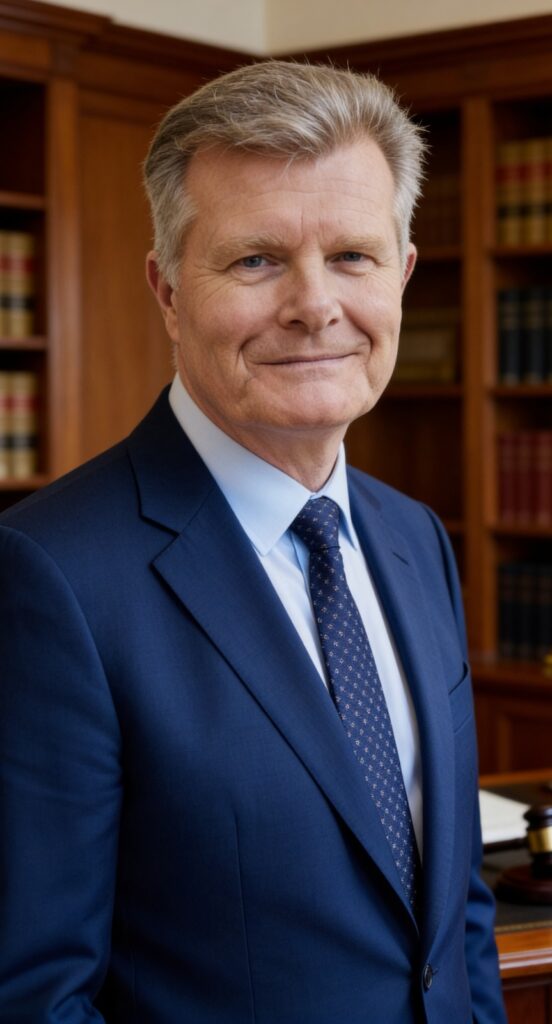
Philip McCormack is an ethicist, educator, Baptist minister and academic leader. He is Director of Academic Affairs at the John Locke Institute, where he leads the development and delivery of international academic programmes and works with scholars and students from around the world.
Philip’s professional life has brought together ministry, education, ethics and public service. After an early career as an engineer at Harland & Wolff in Belfast, he trained for Christian ministry and became pastor of Carryduff Baptist Church. In 1997 he joined the British Army as a chaplain, serving for twenty years in a range of operational, educational and senior leadership roles. His service included Afghanistan, where he was Senior Chaplain to the British Task Force in Helmand Province and subsequently received an MBE for his pastoral care and leadership.
During the latter part of his Army career, Philip became the British Army’s academic lead on ethics. He articulated the ethical foundation of the British Army and created a practical model of ethics that was widely embraced across professional military education. His work brought together virtue ethics, social psychology and professional practice, and contributed to the development of the Army’s Values and Standards.
From 2017 to 2025, Philip served as Principal and Vice-Chancellor of Spurgeon’s College. During his tenure the College secured Full Taught Degree Awarding Powers and achieved Triple Gold in the Teaching Excellence Framework. He is a Principal Fellow of Advance HE, an Honorary Professor at the University of Worcester and an Honorary Master of the Bench at Gray’s Inn. In June 2026, he was awarded the ‘Making History’ Shakespeare Memorial Medal, Issue No. 9, for significant leadership in ethics and education.
Philip is married to Karen and has a son and grandson.
Research and Scholarly Interests
Philip’s research interests have developed around a persistent set of questions: how character is formed, why good people sometimes act badly, and how education and professional practice can help people develop the habits and dispositions necessary for good judgement.
His earlier work in applied ethics brought together virtue ethics and social psychology, particularly in understanding the relationship between thought, action, habit, behaviour and character. This work informed his development of the ethical framework that underpins British Army doctrine and Values and Standards, and continues to shape his interest in ethical leadership, professional formation and the creation of healthy organisational cultures.
More recently, Philip has been exploring the relationship between virtue ethics, character formation and neuroplasticity. His interest is in whether contemporary neuroscience can help explain processes that philosophers have discussed for centuries: how repeated thoughts and actions become habits, how habits contribute to enduring patterns of behaviour, and how those patterns both form and express character. He is particularly interested in the reciprocal relationship between character and behaviour: how repeated actions help form character, while established character in turn shapes characteristic patterns of perception, thought and action.
A related strand of his work considers the implications of these ideas for education and professional formation. This includes how education develops not only knowledge and competence, but also intellectual virtues, ethical judgement, professional identity and character.
Selected Publications
- ‘Ethical Christian Leadership,’ in Well Done Good and Faithful Servant (London: Spurgeon’s, 2024)
- ‘Religion in the Public Sphere: The Role and Function of Military Chaplains’ Semănătorul (The Sower) 2023
- ‘Values or Virtues’ in Military Virtues, ed., M Skerker, D Whetham and D Carrick (Havant: Howgate, 2019)
- ‘Loyalty a Case Study’ in Military Virtues, ed., M Skerker, D Whetham and D Carrick (Havant: Howgate, 2019)
- ‘Compassion’ in Military Virtues, ed., M Skerker, D Whetham and D Carrick (Havant: Howgate Publishing, 2019)
- ‘Political Theology’ in War and Religion: An Encyclopaedia of Faith and Conflict (2017)
- ‘Creating an Organisation Ethic from the Ground Up’, Journal of the RAChD, (2016)
- ‘In Defence of Liberty’, British Army Review (Apr 2015)
- ‘Preparing Professional Soldiers for Operations’, Journal of the RAChD, 2014
Lectures & Conference Presentations
- NATO International Military Chiefs of Chaplains Conference
Invited lecture on ethics and leadership in contemporary military operations. - University of Tel Aviv – Conference on Religion and Conflict
Conference presentation on religion, ethics and modern conflict. - Oxford – Conference on the Changing Character of Conflict
Paper on ethics and leadership in contemporary warfare. - US Army Command and General Staff School – Ethics Conference
Invited presentation on ethics education and professional military leadership. - UK National Policing Ethics Conference
Keynote lecture on ethical leadership in public service institutions. - Defence Academy of the United Kingdom – Leadership and Ethics Lecture Series
Lectures on ethics, leadership and professional military education.
Recent Media & Conversations
People Talk… Politics, Episode 69 (2026) — conversation with Pia Comer on the foundations and defence of Western values, including natural rights, the Judeo-Christian tradition, and ethics in public institutions.